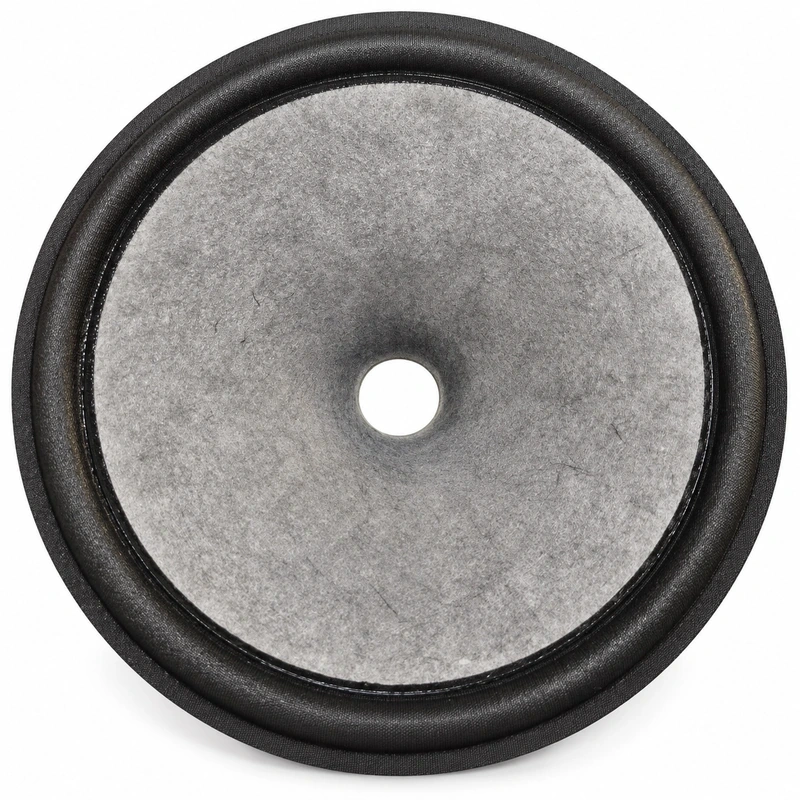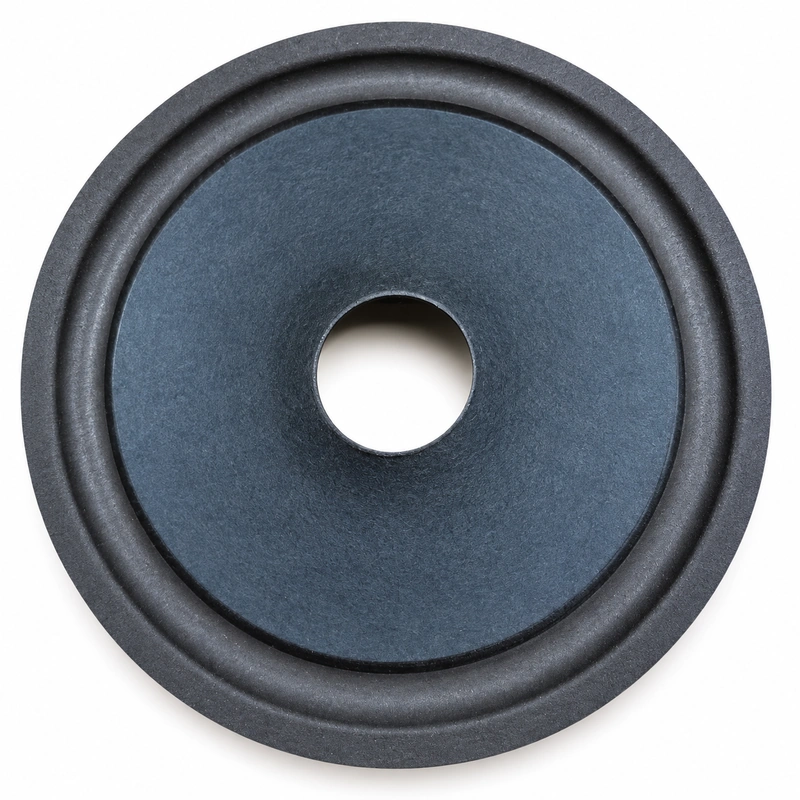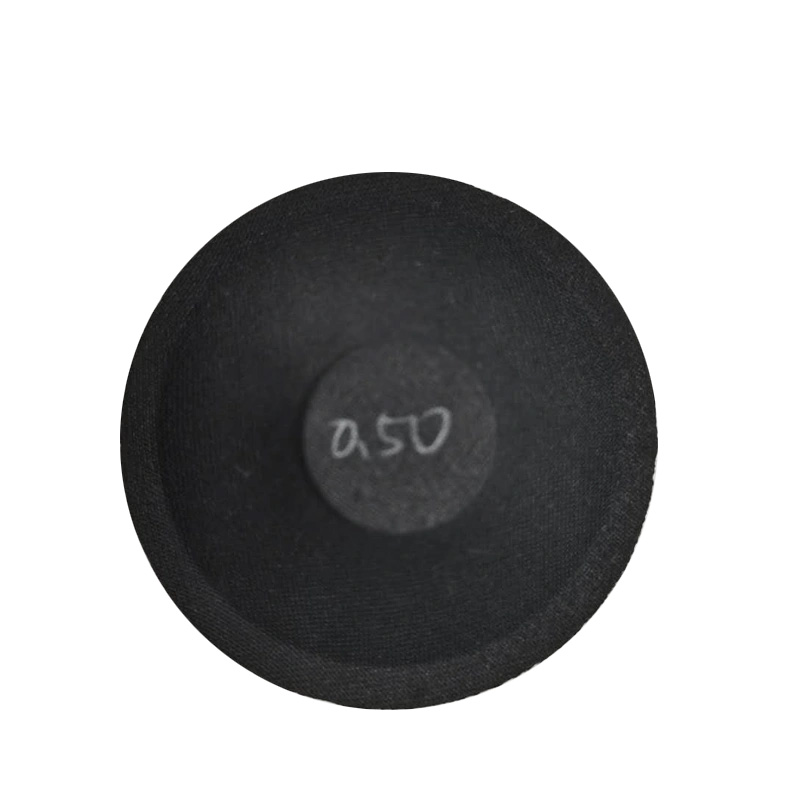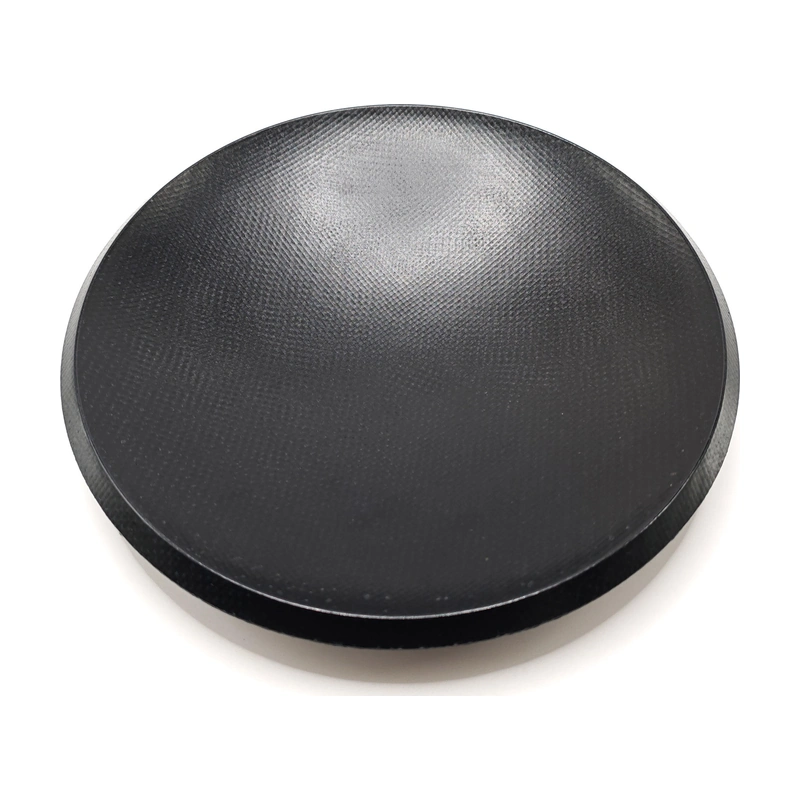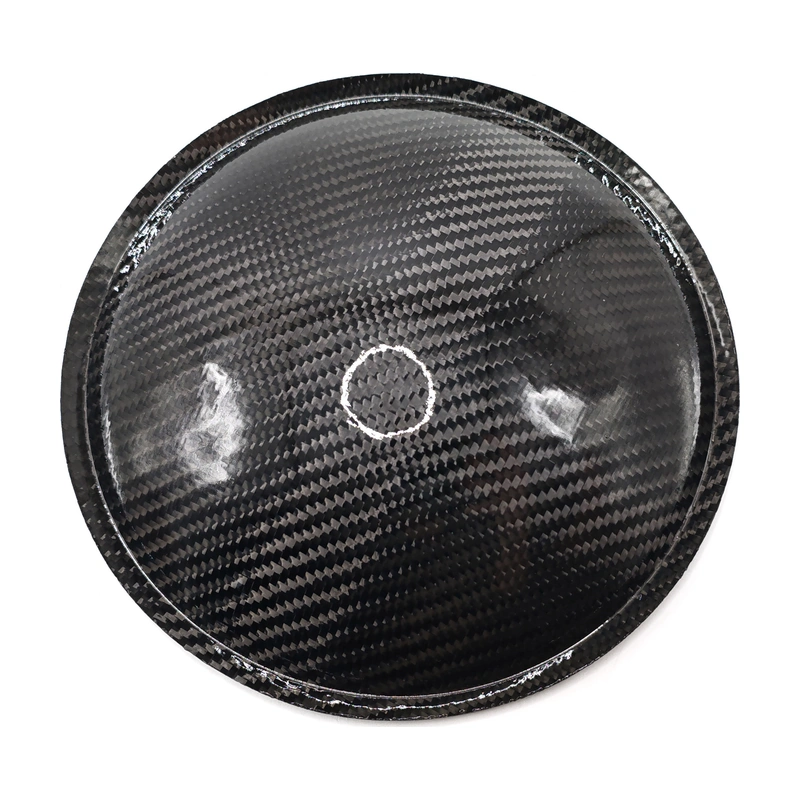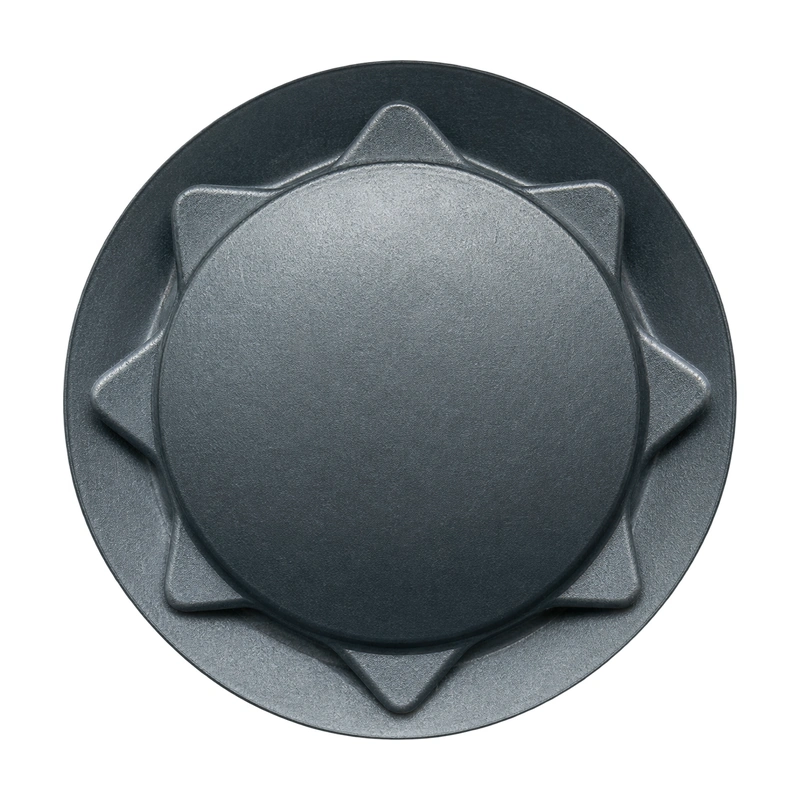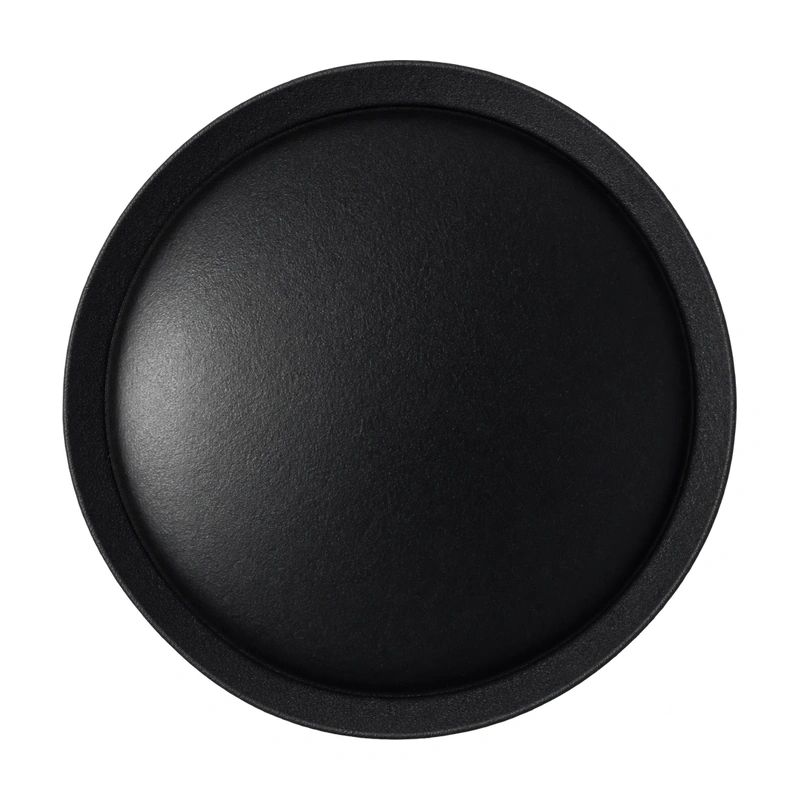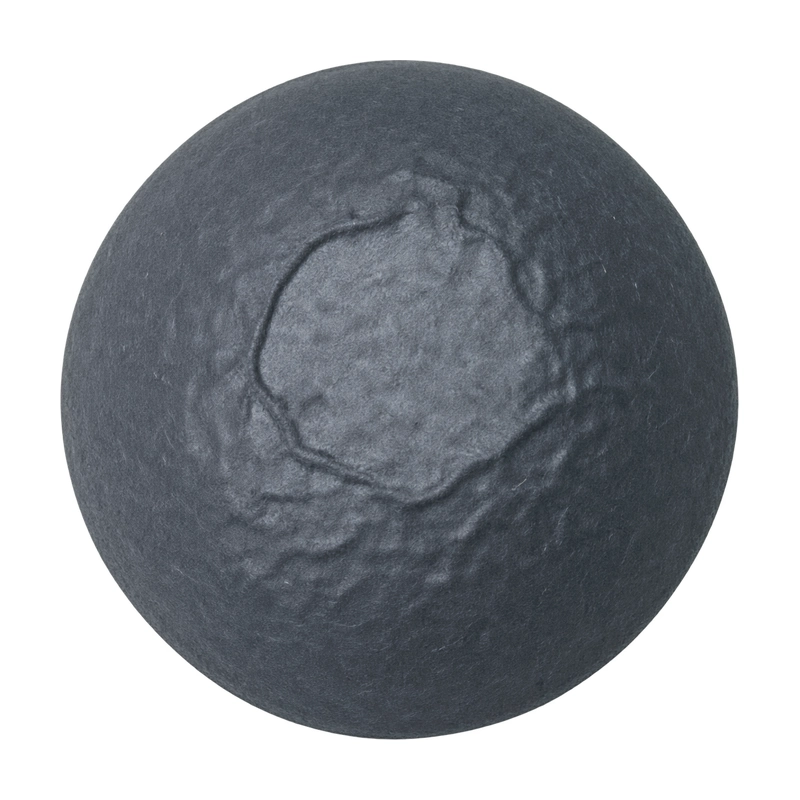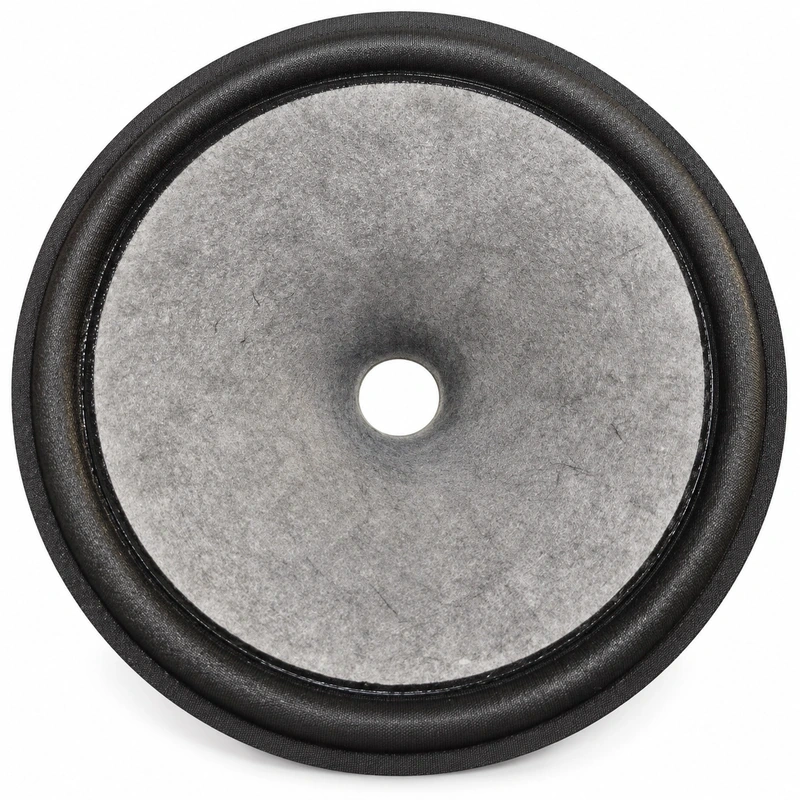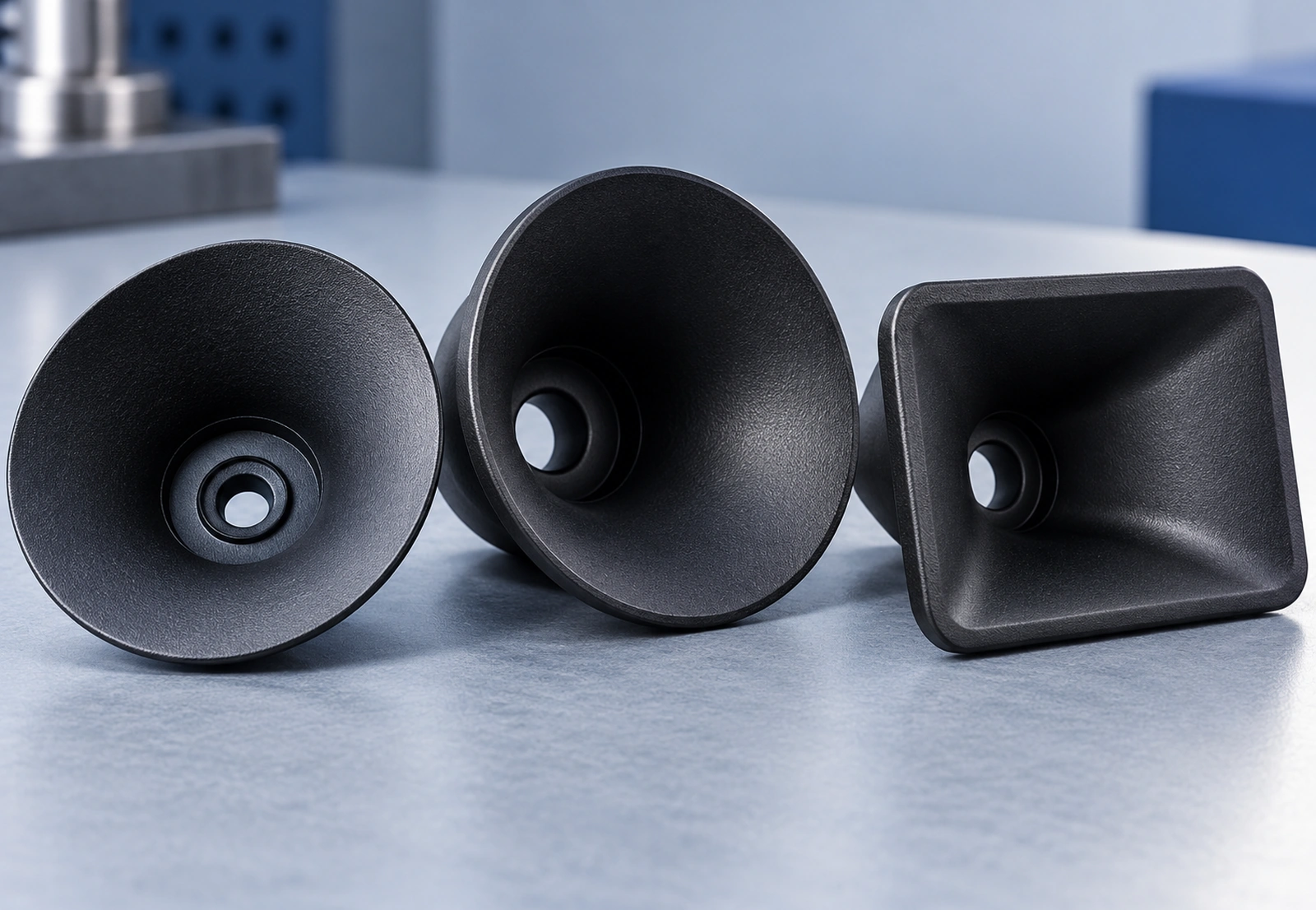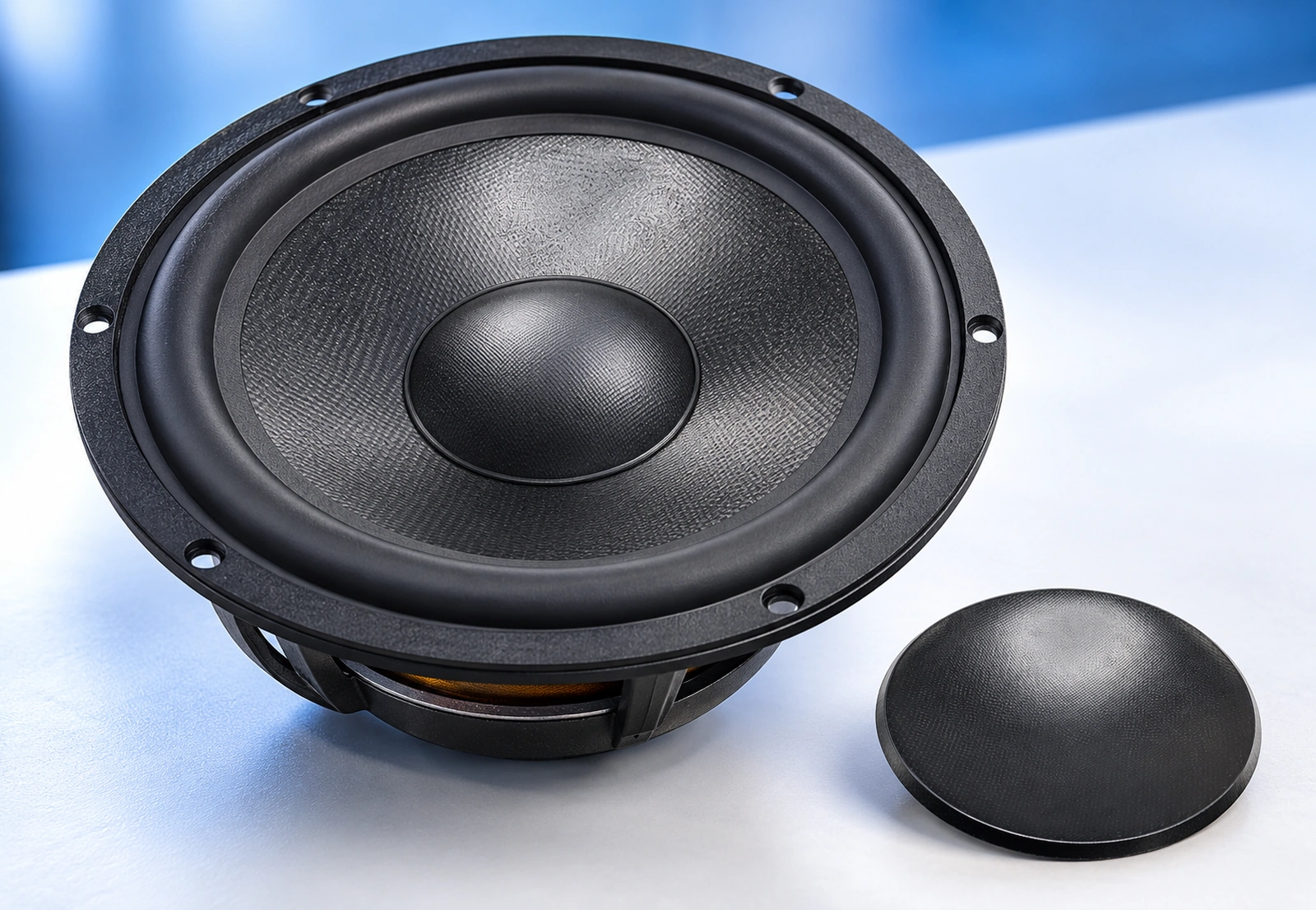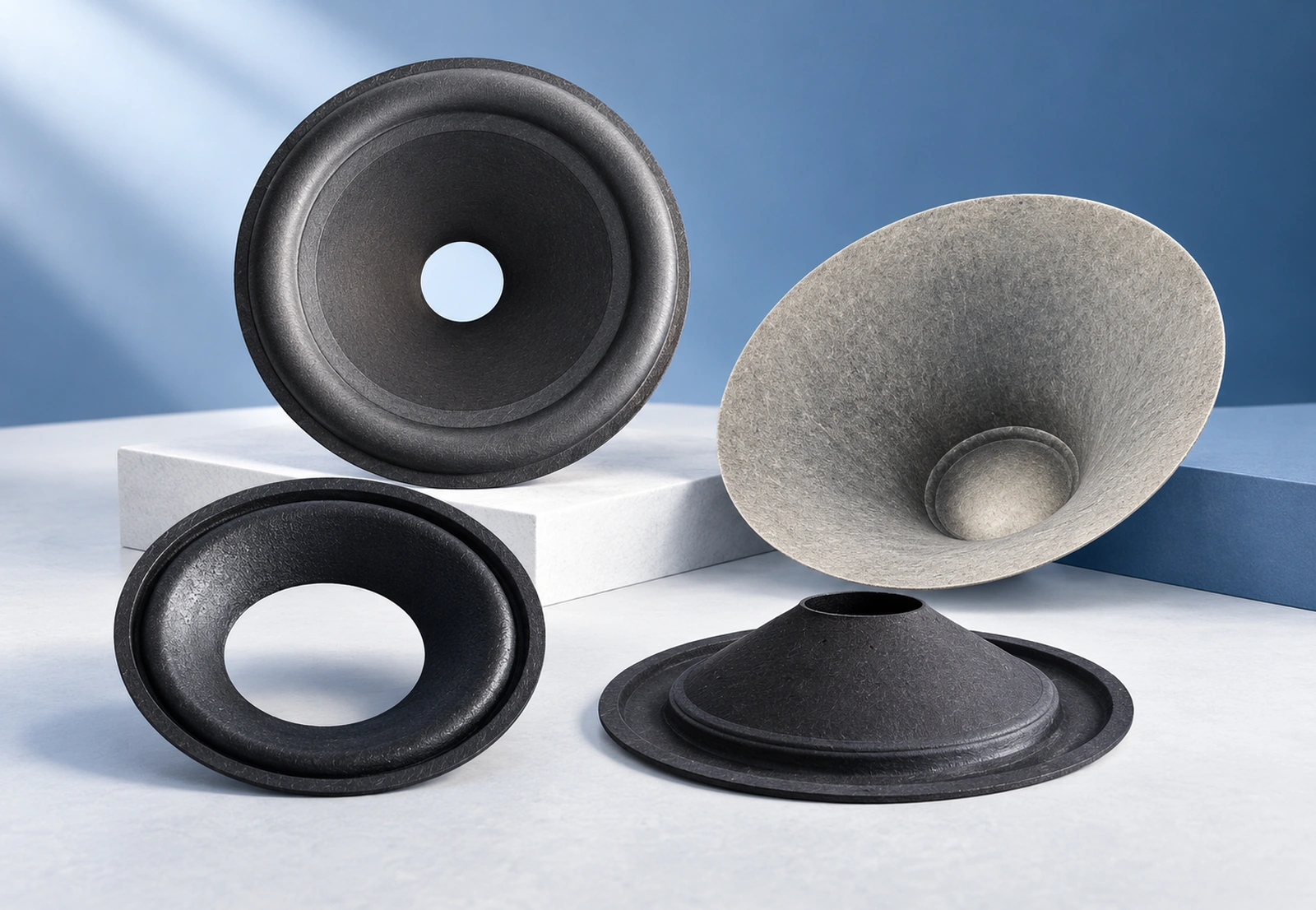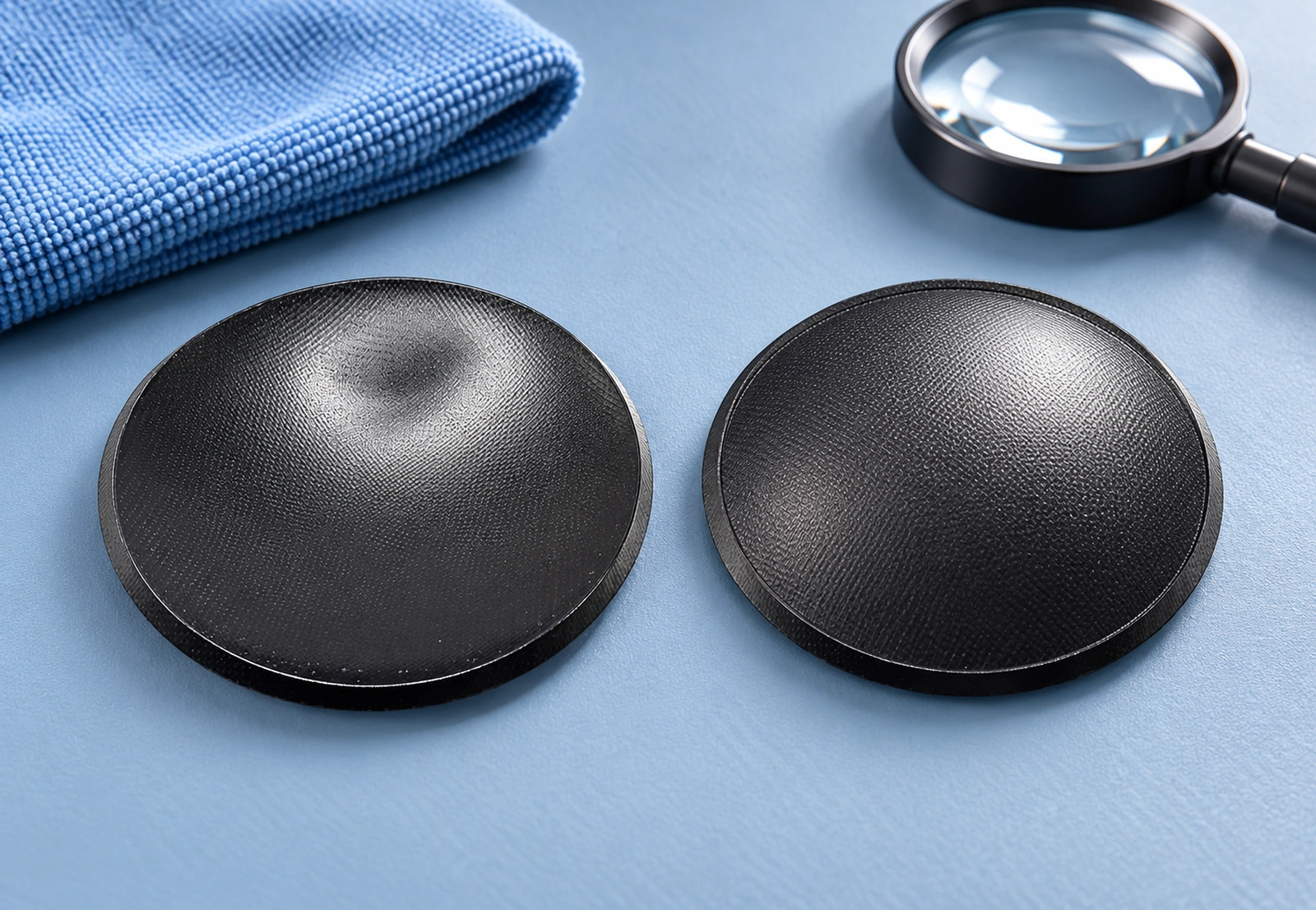
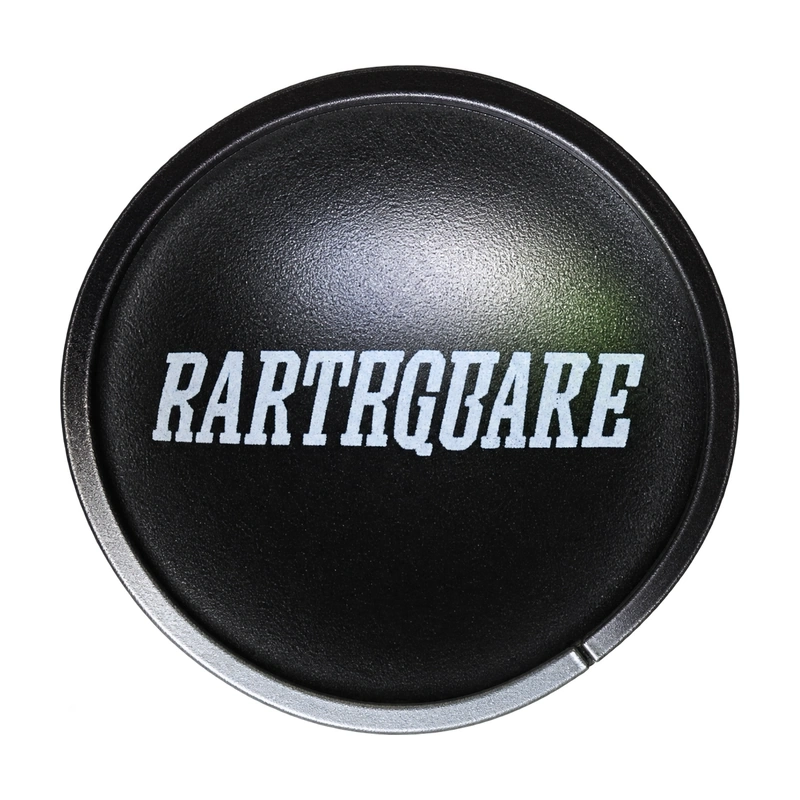

Unlike conventional paper or plastic dust caps, a Mesh Dust Cap for Speaker uses an open textile or wire-mesh structure to allow air to pass through while helping prevent dust and foreign particles from entering the speaker's magnetic gap. Its permeability makes it particularly relevant to loudspeaker designs where airflow around the voice coil and pressure exchange within the driver assembly are important considerations.
The mesh structure also provides a different balance of protection, acoustic transparency and mechanical flexibility compared with solid dust caps. Depending on the selected material, mesh density, opening size and mounting design, it can be adapted to different speaker structures and operating conditions. WellSpring supports customized mesh dust cap development according to application requirements, drawings or reference samples.
Different mesh materials offer different combinations of flexibility, strength, environmental resistance and airflow characteristics. Material selection should consider the speaker's operating environment, required protection level, acoustic requirements and assembly method.
| Mesh Material | Main Characteristics | Potential Applications |
| Nylon Mesh | Flexible, lightweight and suitable for various mesh structures | Consumer speakers, portable audio |
| Polyester Mesh | Good dimensional stability and versatile textile construction | Automotive audio, professional speakers |
| Stainless Steel Wire Mesh | Higher structural rigidity and metal-based construction | Specialized industrial or high-protection speaker designs |
| Carbon Fiber Mesh | Lightweight reinforcement potential and distinctive material structure | Specialized high-performance audio designs |
Material availability, specifications and production suitability should be confirmed with WellSpring for each project.
Mesh count and aperture size influence both airflow and particle protection. A more open structure generally allows greater airflow, while a denser mesh can provide finer particle screening but may increase airflow resistance.
| Design Parameter | Reference Options | Selection Considerations |
| Mesh Count | 40 mesh / 60 mesh / 80 mesh | Balance between airflow and particle screening |
| Aperture Size | Customized opening size | Depends on required dust protection and ventilation |
| Mesh Thickness | Project-specific | Influences flexibility, strength and mounting |
| Mesh Color | Customized | Matches speaker appearance and product design |
Mesh dust caps allow sound waves to pass through the open structure rather than reflecting them from a continuous solid surface. When the mesh material, opening ratio and mounting structure are properly selected, the component can minimize its influence on the driver's intended acoustic response.
The acoustic behavior of a mesh dust cap depends on its material stiffness, tension, mounting method and geometry. Compared with rigid solid caps, certain flexible mesh structures can reduce the contribution of a strongly vibrating cap surface.
However, mesh materials can still exhibit their own vibration modes or mechanical resonances. WellSpring can evaluate the component design against the target driver's acoustic requirements, with final performance verified through testing on the assembled loudspeaker.
Open area ratio: Influences sound transmission and airflow.
Mesh tension: Affects mechanical stability and potential vibration.
Material flexibility: Influences the mesh's response during operation.
Mounting structure: Determines how the mesh interacts with the diaphragm assembly.
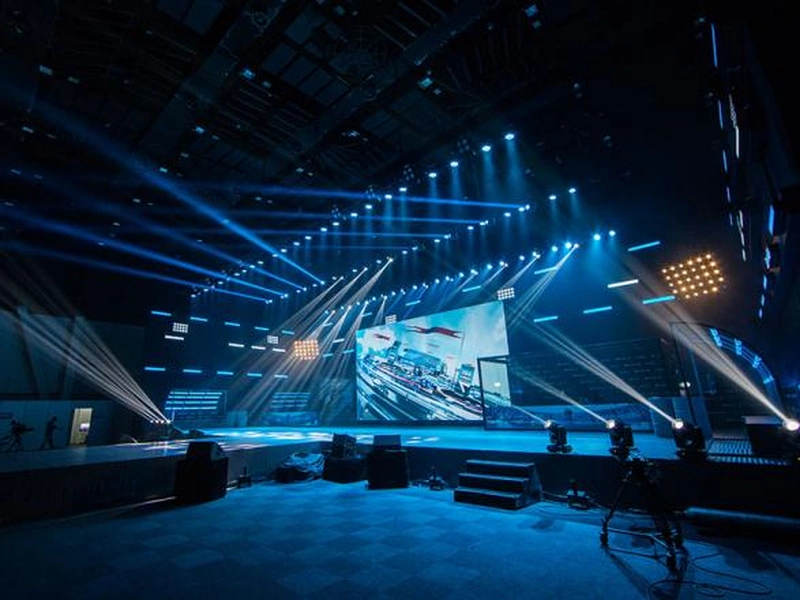
Mesh dust caps can be considered for high-excursion woofer and subwoofer designs where airflow around the voice coil is an important part of the thermal and mechanical design. Typical applications include professional PA systems, stage speakers and KTV audio equipment.
Suitable mesh materials and environmental treatments can be selected for speakers exposed to sunlight, humidity and changing outdoor conditions. Material durability and protection requirements should be matched to the installation environment.
Mesh dust caps offer an alternative component structure for guitar amplifiers and instrument speaker cabinets. Material, mesh opening and cap profile can be selected according to the driver's design and desired acoustic characteristics.
For door-mounted component speakers and other automotive audio systems, mesh dust caps can be designed around available mounting space, vibration conditions and the required balance of airflow and particle protection.


WellSpring can develop mesh dust cap configurations according to speaker drawings, samples or assembly requirements. Possible design directions include:
| Design Type | Structural Features | Suitable Design Considerations |
| Dome Mesh Dust Cap | Raised dome profile | Curved dust cap structures |
| Flat Mesh Dust Cap | Flat mesh surface | Limited installation height |
| Custom-Stepped Flange | Stepped or formed mounting edge | Specific diaphragm and frame assemblies |
To evaluate a mesh dust cap project, buyers can provide:
Speaker model or dust cap application
Outer diameter and mounting dimensions
Required mesh material and mesh count, if specified
Desired aperture size or particle protection requirements
Dome height, profile or reference drawing
Operating environment and acoustic requirements
Estimated order quantity and sample requirements
WellSpring can review the supplied information to determine material suitability, product structure and manufacturing feasibility.
A mesh dust cap has an open structure that allows air to pass through the dust cap area. In a suitably ventilated speaker design, this supports air exchange around the voice coil and can contribute to heat dissipation. The actual cooling performance depends on the complete driver ventilation system and internal airflow path.
Water resistance depends on the mesh material and any applied surface treatment. Hydrophobic finishes may improve water repellency, but an open mesh structure should not automatically be considered waterproof. For outdoor or marine applications, material durability and the required protection level should be confirmed before production.
There is no universal mesh count for every loudspeaker. A lower mesh count generally provides larger openings and easier airflow, while a higher count can offer finer particle screening. The ideal selection depends on the magnetic-gap clearance, dust protection requirement and ventilation design.
A mesh dust cap has an open structure that supports airflow and pressure exchange. A paper dust cap has a more continuous surface and offers different structural and acoustic characteristics. The choice depends on the driver's ventilation requirements, protection needs and intended sound performance.
Customization can be evaluated according to drawings, samples and speaker assembly requirements. Options may include outer diameter, dome height, flat or dome profiles, mounting-edge design and material selection, subject to manufacturing feasibility.
Nylon and polyester meshes may be considered for lightweight applications, while other material options can be evaluated according to mechanical and environmental requirements. For outdoor or marine use, UV resistance, moisture exposure and long-term durability should be assessed as part of material selection.
Please provide the required dimensions, mesh material or reference sample, mesh density or aperture requirements, product shape and estimated order quantity. A speaker model or technical drawing can also help WellSpring assess the application and recommend a suitable product configuration.
Address
Yuanshanbei Village, Changping Town,Dongguan City,Guagndong, China.
Tel